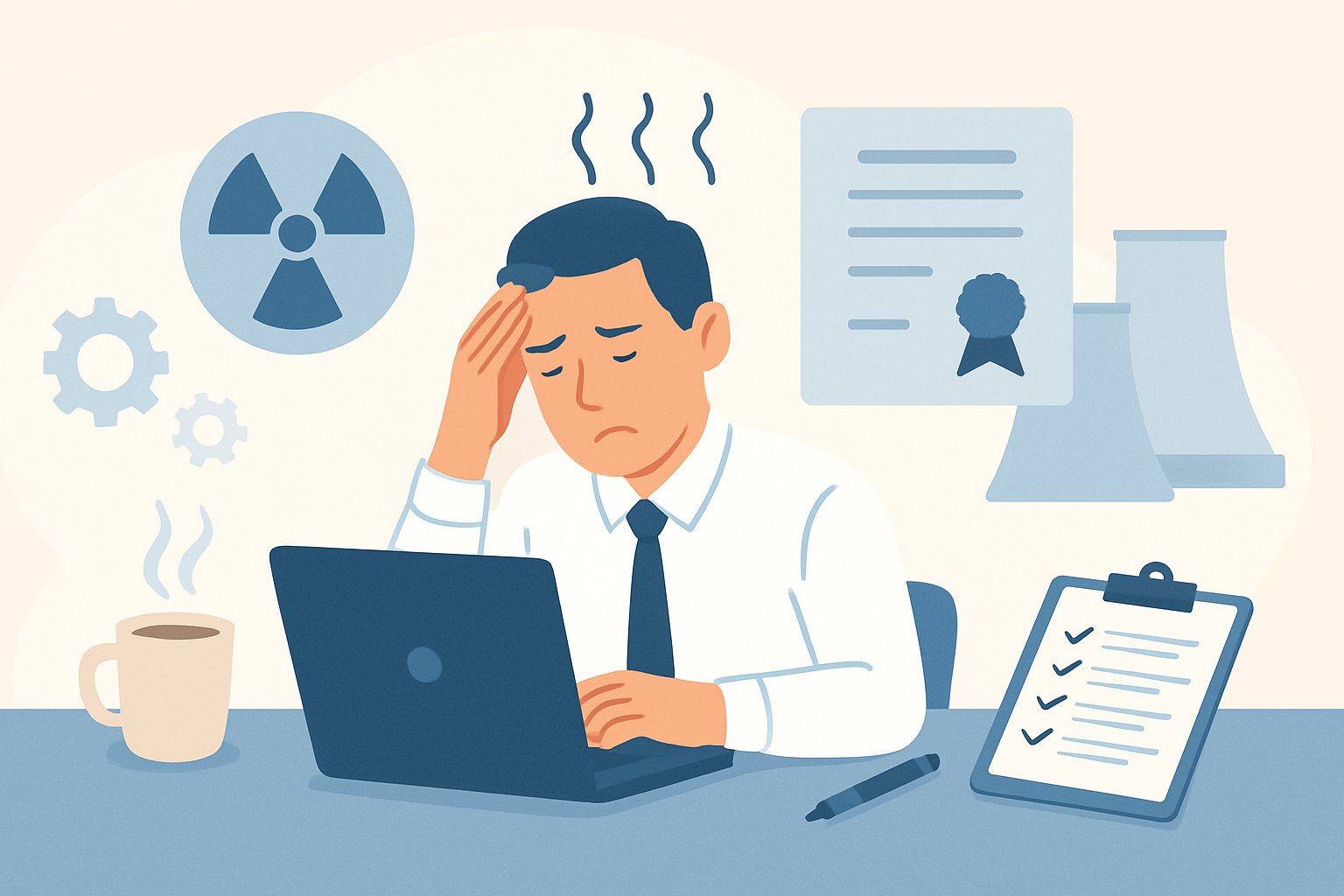
Stress Management for High Responsibility Workers
Workers in nuclear safety, radiation protection, and related high-stakes environments operate under conditions of elevated responsibility and sustained cognitive demand. The nature of their work, which directly impacts public safety and environmental protection, creates unique occupational stressors that differ significantly from many other professional sectors. Understanding and implementing effective stress management strategies is essential for maintaining both individual wellbeing and organisational safety culture. This article examines evidence-based approaches to stress management tailored for professionals working in demanding safety-critical roles.
Understanding Stress in High-Responsibility Environments
Occupational stress in nuclear and radiation protection sectors stems from multiple sources. Workers must maintain constant vigilance over complex systems, adhere to rigorous regulatory requirements, and make decisions with significant consequences. The responsibility of protecting colleagues, the public, and the environment creates psychological pressure that extends beyond typical workplace demands.
Research indicates that chronic stress in safety-critical roles can impair cognitive function, decision-making ability, and situational awareness, precisely the capacities most needed in these environments. The paradox of stress management in nuclear safety is that the conditions causing stress are directly related to the critical nature of the work itself. Rather than eliminating these stressors entirely, which would be neither possible nor desirable, effective approaches focus on building individual and organisational resilience.
Organisational factors significantly influence stress levels among high-responsibility workers. Clear communication structures, transparent safety committee structures and decision processes, and supportive management practices reduce uncertainty and create psychological safety. When workers understand how decisions are made and feel their concerns are heard, stress levels typically decrease.
Practical Stress Management Strategies
Effective stress management for nuclear safety professionals integrates individual techniques with organisational support systems. At the individual level, evidence-based approaches include structured physical activity, which has documented effects on stress hormone regulation and cognitive resilience. Regular exercise provides both physiological and psychological benefits relevant to maintaining performance in high-demand roles.
Mindfulness and attention-based practices have demonstrated measurable effects on stress response systems. These techniques help workers maintain focus and emotional regulation during demanding situations. Training programmes that incorporate stress management principles should align with broader safety culture initiatives, as discussed in training effectiveness evaluation methodologies, ensuring that stress management education is integrated into comprehensive safety training rather than treated as separate from core competencies.
Organisational approaches are equally important. Adequate staffing levels, reasonable shift patterns, and clear role definitions reduce cumulative stress. Occupational health surveillance programs implementation provides frameworks for monitoring worker wellbeing and identifying individuals or teams experiencing elevated stress levels. Early identification enables targeted support before stress becomes chronic.
Peer support networks and mentoring relationships create informal but powerful stress management systems. Experienced workers can provide perspective and coping strategies to those newer to high-responsibility roles. Formal peer support programmes, when structured appropriately, create safe spaces for discussing work-related stress without stigma.
Integration with Safety Culture and Regulatory Compliance
Stress management is not separate from safety culture but rather integral to it. A strong safety culture that values worker wellbeing, encourages reporting of concerns, and supports continuous learning creates conditions where stress is manageable. Regulatory frameworks such as the European Nuclear Safety Directive Implementation emphasise the importance of organisational factors in nuclear safety, recognising that human performance depends on working conditions and support systems.
Training programmes should explicitly address stress management as a competency for safety-critical roles. This includes recognising signs of excessive stress in oneself and colleagues, understanding personal stress responses, and knowing when to seek support. Supervisors and managers require training in recognising stress-related performance changes and in creating supportive work environments.
Documentation and learning systems should capture insights from stress-related incidents or near-misses. When stress contributes to errors or safety concerns, organisations can implement systemic improvements rather than attributing problems solely to individual factors. This approach, consistent with modern safety science, strengthens both stress management and overall safety performance.
Scientific Background
Research in occupational health demonstrates that chronic stress impairs prefrontal cortex function, affecting executive decision-making and working memory. Studies of safety-critical professions show that stress management interventions correlate with improved safety outcomes and reduced error rates. The stress-performance relationship follows an inverted U-curve, where moderate stress enhances performance while excessive stress degrades it. Understanding this relationship helps organisations optimise conditions rather than attempt to eliminate all stress. Longitudinal studies indicate that organisational support for stress management produces sustained improvements in worker health and safety performance.
Conclusion
Stress management for high-responsibility workers in nuclear safety and radiation protection requires integrated approaches addressing both individual and organisational factors. Effective strategies recognise that some stress is inherent to the role and focus on building resilience and support systems. By combining evidence-based individual techniques, organisational practices that reduce unnecessary stressors, and a safety culture that values worker wellbeing, organisations can help professionals maintain the cognitive and emotional resources necessary for safe, effective performance in these critical roles.